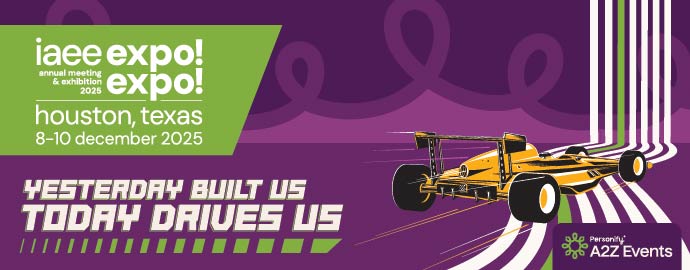
Walking into Expo! Expo! in Houston this year felt both familiar and energizing. This was my second time attending and that perspective mattered. The first time you attend Expo! Expo!, you’re absorbing everything—new ideas, new faces, new acronyms and new pressures. The second time, patterns start to emerge. Themes connect across sessions. You hear the same challenges from different organizers, and you begin to see where the industry is truly shifting not just reacting.
What stood out most in 2025 wasn’t a single “shiny object” trend. Instead, it was a collective maturation of the events industry. The educational sessions revealed an industry moving from volume to value, from automation to augmentation and from transactional tactics to intentional human-centered strategies. Expo! Expo! is no longer just about how to run a trade show well. It’s about how to build experiences, relationships and revenue models that can stand up to uncertainty and change.
Here are the biggest educational takeaways and trends that defined Expo! Expo! 2025.
1. Education Is Shifting From Informative to Transformative
One of the strongest throughlines across the program was a redefinition of what “good education” looks like. Several sessions challenged organizers to move beyond content delivery and toward content activation.
The session From Informative to Transformative: Designing Data-Driven & High-Impact Trade Show Education made this explicit by focusing on learning experiences that drive real-world application. The emphasis wasn’t just on what attendees hear in a room, but what they do afterward and how organizers can use session scans, evaluations and engagement data to continuously refine programming.
This theme showed up again in workshops focused on experience design, behavioral science and experiential strategy. Sessions like Building Events That Feed Connection and those grounded in Experience Economy theory reinforced the idea that learning sticks when it’s layered, emotional and participatory. Education that works today feels less like a lecture and more like a guided experience.
For marketers, this is a powerful reminder: education is no longer a checkbox. It’s a strategic asset that directly impacts attendee satisfaction, brand trust and long-term loyalty.
2. AI Has Moved Past Hype—and Into Workflow
If Expo! Expo! 2024 was about curiosity around AI, 2025 was about clarity. Multiple sessions focused not on whether organizers should adopt AI but how to do it responsibly, practically and with measurable ROI.
Sessions like Beyond the Hype: AI, Augmentation & Automation for Smarter Event Planning and Not Just for Copy: Building Event-Savvy GPTs emphasized a workflow-first mindset. Instead of chasing tools, organizers were encouraged to identify friction points—post-event reporting, run-of-show creation and lead prioritization—and apply AI selectively where it saves time, reduces cost or improves decision-making.
AI chatbots also emerged as a clear area of momentum. The Five Steps to Launch an AI Chatbot for Your Event session demonstrated how these tools are evolving from novelty to necessity, supporting customer service, session discovery and onsite engagement at scale.
The key takeaway? AI is no longer replacing people, it’s supporting them. The organizers who will win are those who use AI to free up their teams to focus on strategy, creativity and relationships.
3. Human Connection Is the Competitive Advantage
Ironically, as AI adoption accelerates, the industry is doubling down on humanity.
Sessions like Human Communications: The Relationship-Driven Event Marketing Strategy You’re Not Using (Yet) made a compelling case that empathy, authenticity and trust are now differentiators not soft skills. Attendees, exhibitors and sponsors expect to be treated as partners not pipeline stages.
This message echoed in sessions on social selling, LinkedIn strategy and relationship-based sales. Even in discussions comparing traditional Rolodex selling to AI-driven prospecting, the conclusion was clear: data can enhance sales but relationships close deals.
For event marketers, this means rethinking messaging, cadence and tone. Automation may scale communication but personalization builds loyalty. The most effective strategies blend technology with intention.
4. Sponsorships Are Becoming Ecosystems, Not Line Items
Another major trend was the evolution of sponsorship strategy. Multiple sessions addressed the reality that traditional logo-driven packages are no longer enough.
Case studies like From Logos to Loyalty: How One Event Reimagined Sponsorship & Boosted Revenue by 41% highlighted a shift toward discovery-based conversations, custom activations and sponsor-aligned experiences. Sponsors want outcomes not impressions and organizers are responding by building integrated ecosystems that extend beyond the booth.
Sessions on prospectus design, executive involvement in sales and strategic sponsorship ecosystems reinforced this point. Successful events are treating sponsorship as a long-term partnership strategy, supported by data, storytelling and post-show reporting that clearly demonstrates ROI.
This aligns closely with what we see at A2Z Events: organizers who can connect data, experience design and sales strategy are better positioned to grow non-dues revenue sustainably.
5. Data Is Finally Telling Better Stories
For years, event professionals have collected massive amounts of data without fully activating it. That’s starting to change.
Sessions like From Chaos to Clarity: AI-Powered Post-Event Reporting and From ROI to Renewals focused on consolidating fragmented data sources and translating insights into narratives that resonate with executives, exhibitors and sponsors.
What stood out was the emphasis on storytelling. Dashboards alone aren’t enough. Organizers are challenged to explain not just what happened but why it mattered and how those insights will inform future decisions.
This represents a meaningful shift: data is no longer just operational. It’s strategic.
6. The Industry Is Actively Planning for Its Future Workforce
One of the most encouraging trends at Expo! Expo! 2025 was the honest conversation around talent and pipeline challenges.
Sessions like The Pipeline Problem and Building the Next Generation Workforce for the Events Industry addressed the disconnect between younger professionals and traditional event models. From outdated programming to misaligned marketing, organizers are being called to intentionally design experiences—and career pathways—that resonate with emerging audiences.
These weren’t abstract conversations. Real frameworks, mentorship programs and partnership models were shared, reinforcing that workforce development is no longer optional. It’s a strategic imperative.
7. Resilience and Crisis Readiness Are Table Stakes
Finally, crisis management sessions reminded us that resilience is no longer theoretical. Whether driven by weather, logistics, labor or global disruption, uncertainty is part of the job.
The Show Must Go On: Crisis Management in Real Time and Show Office: How to Handle the Unexpected During Live Events provided practical frameworks for communication, decision-making and team alignment when plans fall apart.
The takeaway was clear: preparedness isn’t about having the perfect plan—it’s about having adaptable systems, empowered teams and clear communication channels.
Final Thoughts: A More Intentional Industry
Leaving Houston, what I felt most was optimism. Expo! Expo! 2025 reflected an industry that is more self-aware, more strategic and more intentional than ever before.
Event professionals are no longer chasing trends for the sake of relevance. They’re asking harder questions about value, impact and sustainability. They’re blending technology with humanity, data with storytelling and innovation with empathy.
Attending Expo! Expo! for the second time reinforced why this work matters. Events aren’t just gatherings, they’re ecosystems. And when designed thoughtfully, they can drive connection, growth and lasting value for everyone involved.