We need to talk about the binder.
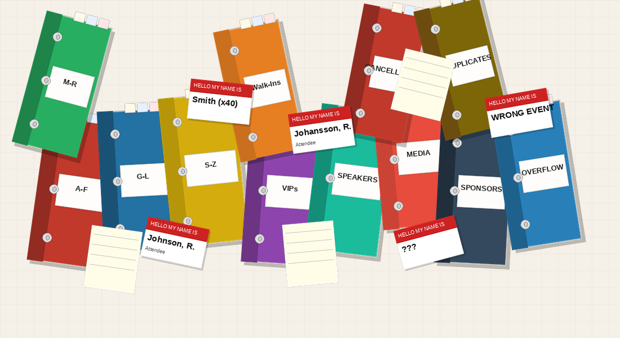
You know the one. A three-ring binder stuffed with pre-printed name tags, organized alphabetically by someone who spent three hours on it the night before and felt genuinely good about it. Then the event starts and there’s a line out the door, and someone is frantically flipping plastic sleeves while the person at the front of the line spells their last name out loud for the third time.
The late registrant is definitely not in there. The person who changed their last name after getting married last month is definitely not in there. “Johnson, Robert” appears 40 times and “Johansson, Roberta” appears zero.
Relying on old-school binders is a relic of the past, and the defining feature of relics is that the right person is never in the right place. The binder doesn’t know someone registered at 11 PM last night. It doesn’t know, and it doesn’t care.
The line at the door is doing more damage than you think
A slow check-in poisons the well before people even walk through the door. Attendees who paid real money to be there are standing in a hallway forming opinions about how organized this thing is going to be. That mood follows them into the opening session, the first keynote, the coffee break conversation. It’s a bad start you can’t un-ring.
The back-end problems are just as bad. Pre-printing badges means committing to a headcount before you have one. So you print extras to cover your bases, waste a pile of materials, and still end up missing the badge for the person who registered yesterday. And you’re flying blind on attendance all day: how many people have actually shown up, which sessions are filling up, where the crowd is clustering. With a paper system, the honest answer is that you’ll piece it together eventually.
What it looks like when it actually works
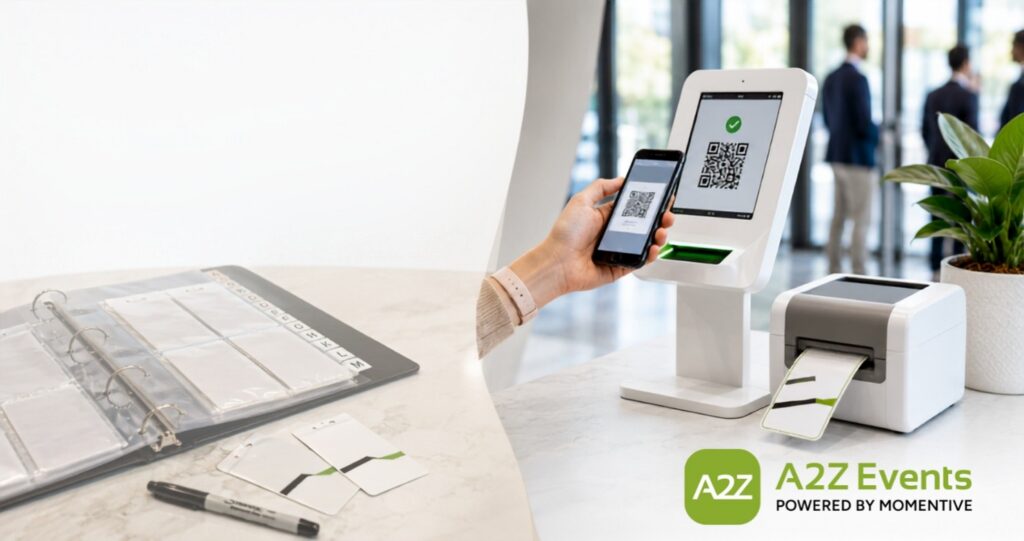
A2Z Events by Momentive solves the binder problem at the root. Badges print on demand, at the moment someone checks in, for exactly the people who show up. That 11 PM VIP registrant walks in and gets a badge that looks completely intentional, because it is. Same design, same quality, same professional finish as everyone else’s. No Sharpie backup. No apologetic sticker. No explaining.
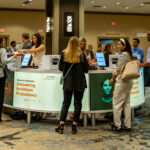
The self-service kiosks are where things really start moving. Attendees check themselves in with a QR code scan or through the mobile app, the badge prints, and they’re through the door. Your staff stops being human search engines and can actually host the event. The kiosks are fully branded to your event, which sounds like a small thing until you realize the check-in table is the first physical thing attendees interact with. A polished, branded kiosk says something very different than a folding table with a laptop and a stressed-out volunteer.
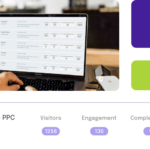
The part that changes how you manage the day is the real-time reporting. Instead of asking “how many people do we have?” and waiting for someone to count, you pull up a dashboard and see check-in volume by hour, where bottlenecks are forming, how badge printing is keeping pace. You can make actual decisions instead of educated guesses.
A2Z Events also handles the part of event tech that most software companies treat as your problem: the physical day-of setup. They send experienced on-site staff to manage kiosks, troubleshoot printers, and deal with whatever goes sideways, because something always goes sideways. Having someone there who has personally seen every version of “the printer stopped mid-badge” is worth more than most line items in an event budget.
Walk-in registrations and on-site payments plug directly into the same system, so you’re not reconciling two different tools at the end of the night. Someone shows up without registering, pays at the door, gets a badge, and keeps moving.
Stop duct-taping tools together
If you’re running check-in with disconnected systems and a box of backup Sharpies, you’re carrying risk and spending time you don’t have to. Every minute the line isn’t moving is a minute your attendees are making judgments. Every gap in your data is a question you can’t answer when your boss asks how the event went.Schedule a demo with A2Z Events and see what the setup actually looks like. The ROI math tends to get obvious pretty fast.