Every show hits the same wall eventually. The floor sells out in March, which is the good news, and then sponsorship revenue flattens because there’s nothing left to sell. Your sales team is calling companies who already bought the thing you have, to offer them the thing you don’t.
Meanwhile you’re sitting on a pile of digital inventory nobody has ever put a price on. Not because it lacks value, but because it never appeared on a rate card, and inventory that isn’t on a rate card doesn’t get sold. It just gets given away to whoever asks nicely.
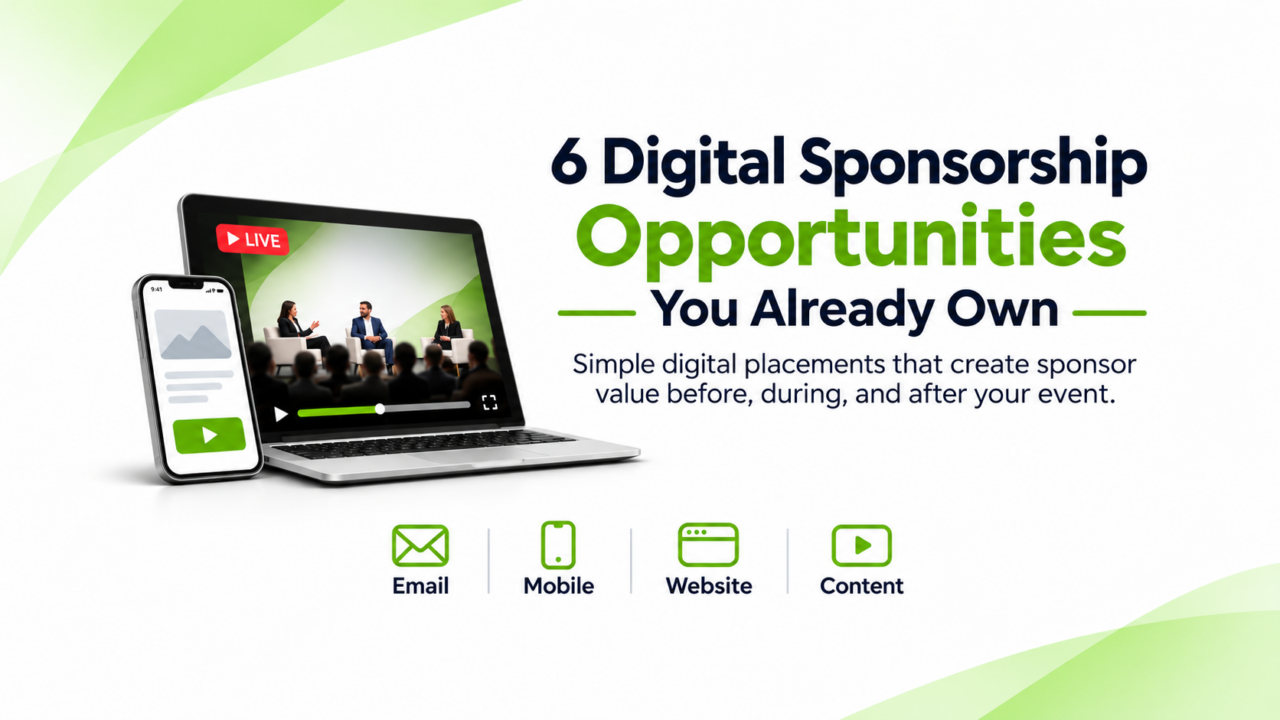
Here are six you almost certainly own right now. The production cost on most of them rounds to zero, because the asset already exists and the sponsor supplies the artwork.
The app splash screen
This is the single most-seen piece of real estate at your entire event, and most shows hand it to their own logo.
Every attendee who opens your app sees it. Then they see it again, every time they open the app, which at a three-day conference is dozens of times per person. No booth on your floor gets that kind of repeat exposure from that many people.
Push notifications
Push is the only channel at your event that reaches someone’s pocket while they’re standing in your building. That’s worth real money, and almost nobody charges for it.
The thing that makes push valuable is also the thing that constrains it. Send four a day and attendees turn them off, at which point you’ve destroyed the asset for everyone including yourself. So the inventory is genuinely scarce, and scarcity is the whole pricing argument.
Sell three for the entire show, not thirty.
Make each one useful on its own terms, with the sponsor attached to something an attendee wants to know: the happy hour location, the keynote starting in ten minutes, where coffee is. A sponsored notification that helps someone gets read. A sponsored notification that just says a company name gets your whole push channel muted.
The session livestream bumper
If you stream sessions, record them for on-demand, or post them to your member library afterward, you have a five-second card at the front of every video and you are almost certainly running it blank.
What makes this one unusually good is the tail. A booth works for three days. A session recording in your education library gets watched for the next eighteen months, by members who didn’t attend and are now watching a sponsor’s logo on their way into content they chose. That’s a different kind of impression than a banner someone walks past.
The matchmaking category sponsor
When attendees browse exhibitors or search for meetings by category, somebody sits at the top of “Facility Management” or “Clinical Software.” Today that’s alphabetical, which means you’re allocating prime inventory to whoever named their company with an A.
Sell it instead. The attendee browsing that category is already looking for exactly that kind of vendor, which puts this much closer to intent-based advertising than to brand exposure, and intent is the thing sponsors are chronically short of at events.
The venue wifi
Worth being upfront: this one runs through your venue or AV partner rather than your event platform, so it needs a conversation and sometimes a line in the venue contract. It’s still the most underpriced asset in the building.
There are two pieces of inventory here. The network name, which every attendee reads and several hundred will physically type, and the captive portal they land on before they get connected. That portal is the only screen at your show with undivided attention, because nobody abandons a wifi login halfway through. Name the network after the sponsor, put their artwork on the landing page, and you’re done. Your venue has done this before.
The post-show report cover
You already build a post-show report. It goes to your board, your exhibitors, your members, and quite often your industry press. It has your logo on the front and a lot of white space around it.
This one works differently from the other five. Every other asset here reaches attendees during the show. The post-show report reaches decision-makers afterward, including the ones who didn’t attend and are deciding whether to next year. A sponsor who wants to be seen as a category leader by an entire industry, not just by the people who came, will understand the difference immediately.
It’s also the longest-lived asset you own.
That PDF gets forwarded internally, cited in planning meetings, and pulled up again when the next budget cycle starts.
What the six add up to
Price those six at the levels above and you land somewhere in the range of eight to ten premium booths’ worth of revenue, depending on your rate card and how many push slots and content tracks you’re willing to sell.
You did that without adding a square foot of floor, renting more hall, or asking a single exhibitor to buy something they weren’t already interested in. The marginal cost of the entire package is a handful of image files and the time to load them.
Two more while you’re looking
The part that actually decides whether this works
None of these ideas are hard. Shows don’t miss this revenue because they lack imagination, they miss it because selling twelve small items is operationally worse than selling one big one, and nobody wants to manage the fulfillment.
Twelve digital placements means twelve sets of artwork to chase, twelve deadlines, twelve specs to explain, and twelve chances for a sponsor to send a logo at the wrong size on the Friday before the show. That overhead is the actual barrier, and it’s the reason good inventory sits unsold year after year.
Which is why the mechanics matter more than the ideas.
Put the full list where exhibitors can browse it and buy it themselves. Make the specs and deadlines part of the purchase instead of a follow-up email. Automate the chase.
Pricing guidance here anchors to your own existing rate card rather than industry benchmarks, because what a placement is worth depends entirely on your audience size and what your floor already commands.